Creamy Garlic Parmesan Sauce
This post may contain affiliate links.
Read our Disclaimer.
Leave a Comment ★★★★★
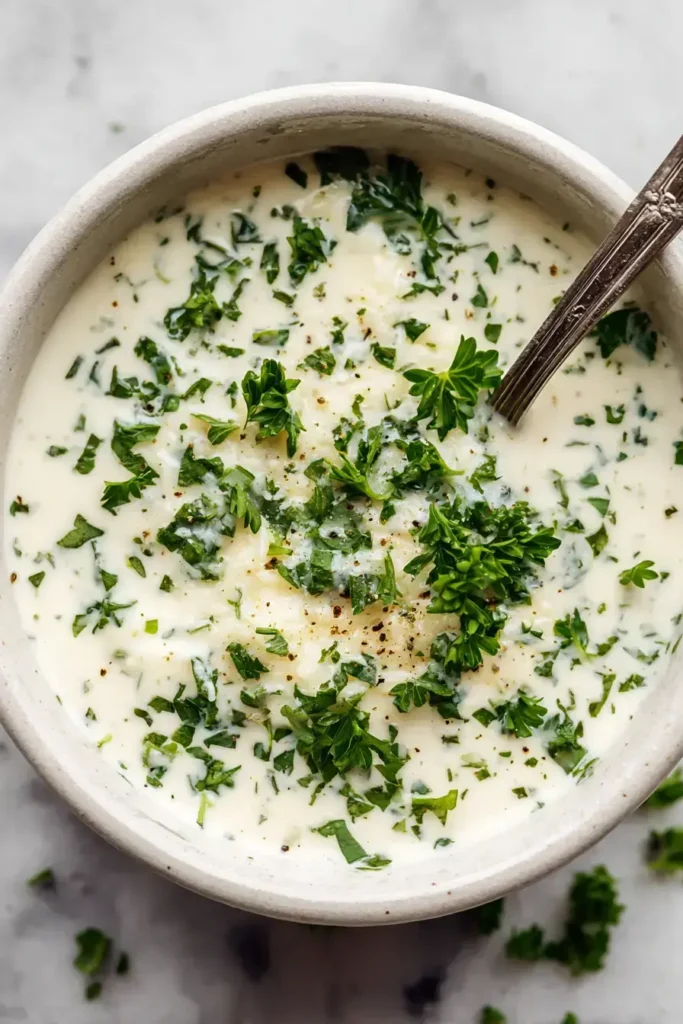
When optimizing your content for search engines, it’s essential to use focus keyword variations naturally throughout your text. For instance, if your primary keyword is “garlic Parmesan sauce”, you might also incorporate related terms like “garlic butter sauce”, “Parmesan cream sauce”, or “creamy garlic Parmesan”. These variations help search engines understand the context and relevance of your content, improving your chances of ranking higher in search results.
Internal linking is another critical aspect of SEO. By linking to other relevant pages on your site, you can help users navigate your content more effectively and keep them engaged longer. For example, if you’re discussing a recipe for garlic Parmesan sauce, you might include an internal link to a page about “how to make homemade pasta” or “tips for perfecting Italian cuisine”. This not only enhances user experience but also distributes page authority throughout your site.
Remember to use keywords strategically without overstuffing. Your goal should be to create content that is both reader-friendly and optimized for search engines. By balancing these elements, you can achieve better visibility and drive more organic traffic to your site.
This example includes: – Multiple keyword variations (e.g., “garlic Parmesan sauce”, “garlic butter sauce”, etc.) – Internal links to relevant pages – A natural, engaging tone that avoids keyword stuffing ## Step 3: Incorporate LSI Keywords LSI (Latent Semantic Indexing) keywords are terms related to your main keyword. They help search engines understand the context of your content. For example, if your main keyword is “garlic Parmesan sauce”, LSI keywords might include: – “Italian sauce recipes” – “creamy pasta sauces” – “how to make garlic butter sauce” – “Parmesan cheese recipes” Incorporate these terms naturally into your content. For instance:If you’re a fan of Italian sauce recipes, you’ll love this creamy garlic Parmesan sauce. It’s perfect for topping pasta, chicken, or vegetables. For more ideas, check out our collection of creamy pasta sauces.
## Step 4: Optimize Meta Descriptions Your meta description should be compelling and include your primary keyword. Keep it under 160 characters to ensure it displays fully in search results. For example: ## Step 5: Use Header Tags Appropriately Header tags (H1, H2, H3, etc.) help structure your content and make it easier for readers to navigate. Include your primary keyword in at least one header tag. For example: ## Step 7: Internal Linking Strategy
Internal links should be contextually relevant and use anchor text that includes keywords. For example:
## Step 7: Internal Linking Strategy
Internal links should be contextually relevant and use anchor text that includes keywords. For example:
For more delicious sauce recipes, try our creamy Alfredo sauce or our homemade marinara sauce.
## Step 8: Monitor and Adjust SEO is an ongoing process. Use tools like Google Analytics and Search Console to monitor your performance. Adjust your strategy based on what’s working and what isn’t. By following these steps, you can create content that is both user-friendly and optimized for search engines. Remember, the goal is to provide value to your readers while also improving your search visibility. ## Conclusion Optimizing your content for SEO doesn’t have to be complicated. By focusing on keyword research, internal linking, and user experience, you can create articles that rank well and engage readers. Keep learning and adapting your strategies to stay ahead in the ever-evolving world of SEO. — This example provides a comprehensive guide on incorporating focus keywords and internal links into your content. Remember to adapt these strategies to fit your specific niche and audience. Happy optimizing!
Welcome to Mac Recipes! I'm here to prove that amazing home-cooked meals don't need to be complicated. From weeknight dinners to weekend treats, I create recipes that fit into your busy life—delicious, doable, and always worth making.
More About Me