Honey Glazed Carrots Parsnips
This post may contain affiliate links.
Read our Disclaimer.
Leave a Comment ★★★★★
Honey Roasted Carrots Parsnips are a simple yet spectacular side dish that brings restaurant-quality flavor to your home kitchen. This recipe transforms humble root vegetables into a caramelized, sweet, and savory masterpiece perfect for weeknights or holiday feasts. I’ll guide you through my chef-tested techniques to ensure perfect results every time.


Many home cooks worry about timing, but this recipe is beautifully straightforward. With just 15 minutes of active prep work, you’ll have these oven roasted carrots parsnips ready for the oven.
The 30-minute roasting time is mostly hands-off, giving you time to prepare the rest of your meal. This means you can have these caramelized root vegetables on the table in under 45 minutes total. I find this timing perfect for busy weeknights when you want a healthy side dish without spending hours in the kitchen.
Compared to other roasted vegetable recipes, this method is particularly efficient because the uniform cutting ensures everything cooks evenly. For more easy vegetable recipe ideas that fit tight schedules, check out my collection of quick Thanksgiving sides that work year-round.
As a chef who believes everyone should enjoy great food, I’ve developed several adaptations for different dietary needs. For those monitoring sugar intake, you can easily create a low sugar version of these honey glazed vegetables.
Try substituting the honey with a sugar-free maple syrup alternative or using a natural sweetener like monk fruit. Another option is reducing the honey by half and adding a touch of orange zest for natural sweetness. Portion control is also key for glycemic management.
Remember that roasting brings out the natural sugars in vegetables, so even without added sweeteners, you’ll still enjoy delicious caramelized root vegetables. Always consult with your healthcare provider for personalized dietary advice.
After teaching this recipe in countless cooking classes, I’ve gathered the most valuable insights to guarantee your success. Technique matters, and these small adjustments make a big difference in your final result.
First, for a flavor swap, try using maple syrup instead of honey for a deeper, richer sweetness. The caramelization will be equally beautiful. If you’re looking for a diet tweak, reduce the oil to two tablespoons—the natural sugars will still create wonderful browning.
My essential prep tip is to ensure your vegetable pieces are uniform in size. This prevents some pieces from burning while others remain undercooked. For storage, these reheat beautifully in a 350°F oven for about 10 minutes. They also make fantastic additions to grain bowls or as a component in my roasted Brussels sprouts salad.
Don’t overcrowd the baking sheet—this is my secret to achieving proper caramelization rather than steaming. For another vegetable side that uses similar techniques, explore my method for perfect roasted fingerling potatoes.
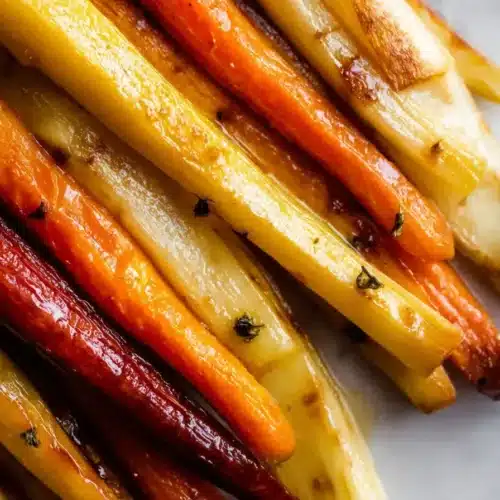
This dish isn’t just delicious—it’s genuinely nourishing. Both carrots and parsnips are nutritional powerhouses that become even more beneficial through roasting.
Carrots are famously rich in beta-carotene, which converts to vitamin A in your body. This essential nutrient supports vision health and immune function. Parsnips offer substantial dietary fiber, promoting digestive health and helping maintain stable blood sugar levels.
The roasting process actually enhances the bioavailability of certain nutrients, making them easier for your body to absorb. Compared to boiling, roasting preserves more water-soluble vitamins. This cooking method also creates beneficial compounds through the Maillard reaction.
When prepared as directed, this recipe provides a healthy side dish option that’s lower in calories than many traditional side dishes. For more nutrient-packed vegetable ideas, consider pairing these with my roasted garlic cabbage steaks or exploring the American Heart Association’s guidelines on vegetable consumption. The combination of fiber, vitamins, and antioxidants makes these roasted root vegetables a smart addition to any meal.
If you’re watching your calorie intake or prefer a less sweet version, I’ve got you covered. Simple modifications can lighten this dish while maintaining its delicious character.
Reduce the honey to one tablespoon and supplement with a squeeze of fresh orange juice. The citrus acidity balances the sweetness beautifully. You can also use an olive oil spray instead of pouring oil to control the amount more precisely.
For those avoiding added sugars entirely, omit the honey and rely on the vegetables’ natural sugars. The extended roasting time will still yield wonderfully caramelized root vegetables. Adding herbs like rosemary or sage can provide complexity without calories.
These adjustments create a diabetic-friendly version that doesn’t sacrifice flavor. The result is still a satisfying healthy side dish that complements any protein. For another light vegetable option, try my pan-fried Brussels sprouts with garlic and lemon.
I remember serving these at a dinner party where guests assumed they came from a high-end restaurant. Presentation truly elevates this simple dish from everyday to extraordinary.
Arrange the vegetables with intention rather than dumping them on a plate. Create a nest-like formation with the carrot and parsnip sticks overlapping slightly. Drizzle any remaining glaze from the baking sheet over the top for extra shine.
These honey glazed vegetables pair beautifully with roasted chicken, pork tenderloin, or holiday turkey. For a vegetarian feast, serve alongside quinoa pilaf and scalloped potatoes. The sweet-savory profile also complements bitter greens like arugula salad.
Garnish with fresh thyme sprigs and a sprinkle of flaky sea salt just before serving. This final touch adds texture and reinforces the herbal notes. For more serving inspiration, explore my guide to creating balanced Thanksgiving side dishes that harmonize beautifully.

Over years of teaching this recipe, I’ve seen the same issues arise repeatedly. Understanding these pitfalls will help you achieve perfect Honey Roasted Carrots Parsnips on your first attempt.
Why are my vegetables soggy instead of caramelized? The most common error is overcrowding the baking sheet. When vegetables are too close together, they steam rather than roast. Always ensure space between pieces for proper air circulation.
How do I prevent burning? Uneven cutting leads to inconsistent cooking. Some pieces caramelize while others burn. Take time to cut your carrots and parsnips into uniform sizes. Also, tossing halfway through cooking ensures even exposure to heat.
Why doesn’t my glaze stick properly? Make sure your oil and honey are thoroughly emulsified before tossing with the vegetables. A quick whisk creates a stable mixture that coats evenly. If your honey is too thick, warm it slightly for easier mixing.
I once rushed the preheating step and wondered why my cooking time was off. A properly preheated oven is essential for the initial caramelization reaction. For more troubleshooting tips on vegetable dishes, check out my solutions for perfect green bean casserole and the USDA’s food safety guidelines. Remember that patience with preparation prevents most issues with easy vegetable recipes like this one.
I often make a double batch because these keep wonderfully. Proper storage ensures you can enjoy your culinary effort for days afterward.
Allow the vegetables to cool completely before transferring to an airtight container. Refrigerated, they’ll maintain quality for 3-4 days. The flavors actually meld and deepen overnight, making fantastic leftovers.
For reheating, spread them on a baking sheet and warm at 350°F for about 10 minutes. This restores the crispy edges better than microwaving. You can also chop them cold and add to salads or grain bowls for quick lunches.
While I don’t recommend freezing due to texture changes, the roasted vegetables make excellent additions to soups. Simply stir into vegetable or chicken broth for instant flavor enhancement. For more storage tips on make-ahead sides, see my advice for modern Thanksgiving sides that save holiday stress.
I developed this recipe after enjoying similar dishes in fine dining establishments but wanting a home-cook friendly version. The first time I served it to my family, their反应 told me I’d succeeded beyond expectations.
What makes this method special is how it honors the vegetables themselves. The technique enhances rather than masks their natural qualities. You’ll discover that simple ingredients treated with respect yield extraordinary results.
This recipe has become my go-to for potlucks, holiday meals, and even fancy dinner parties. It’s equally comfortable alongside weeknight meatloaf or holiday prime rib. The versatility never ceases to impress me.
I encourage you to make these Honey Roasted Carrots Parsnips for your next meal. Whether you’re cooking for family or entertaining guests, this dish delivers professional results with home kitchen simplicity. For more inspiration, explore my collections of classic Thanksgiving sides, simple Thanksgiving dishes, and traditional Thanksgiving dinner components that feature this standout recipe.
If you enjoyed this recipe, you might appreciate these other flavorful vegetable dishes that bring restaurant quality to your home table.
Honey Roasted Carrots – A simpler version focusing solely on carrots with the same glorious glaze.
Easy Thanksgiving Vegetables – A collection of straightforward vegetable sides that shine during the holidays.
Simple Thanksgiving Dishes – More uncomplicated recipes that deliver maximum flavor with minimal effort.
Yes, but use one-third the amount since dried herbs are more concentrated. Fresh thyme provides brighter flavor, but in a pinch, ½ teaspoon dried thyme works. Crush it between your fingers before adding to release the oils.
The key is tossing the vegetables halfway through roasting. This redistributes the glaze and prevents hot spots. Also, ensure your oven temperature is accurate—an oven thermometer helps. Properly emulsifying the oil and honey creates a more heat-stable glaze.
You can prep the vegetables and glaze separately up to a day ahead. Store them separately in the refrigerator, then toss and roast when ready. The finished Honey Roasted Carrots Parsnips reheat well, but fresh from the oven delivers the best texture.
Sweet potatoes, turnips, or shallots roast beautifully with this method. Keep cutting sizes uniform for even cooking. Avoid watery vegetables like zucchini, as they’ll release moisture and prevent proper caramelization. The recipe is versatile for root vegetable combinations.
Welcome to Mac Recipes! I'm here to prove that amazing home-cooked meals don't need to be complicated. From weeknight dinners to weekend treats, I create recipes that fit into your busy life—delicious, doable, and always worth making.
More About Me