Detroit Style Pizza Crispy Edges
This post may contain affiliate links.
Read our Disclaimer.
Leave a Comment ★★★★★
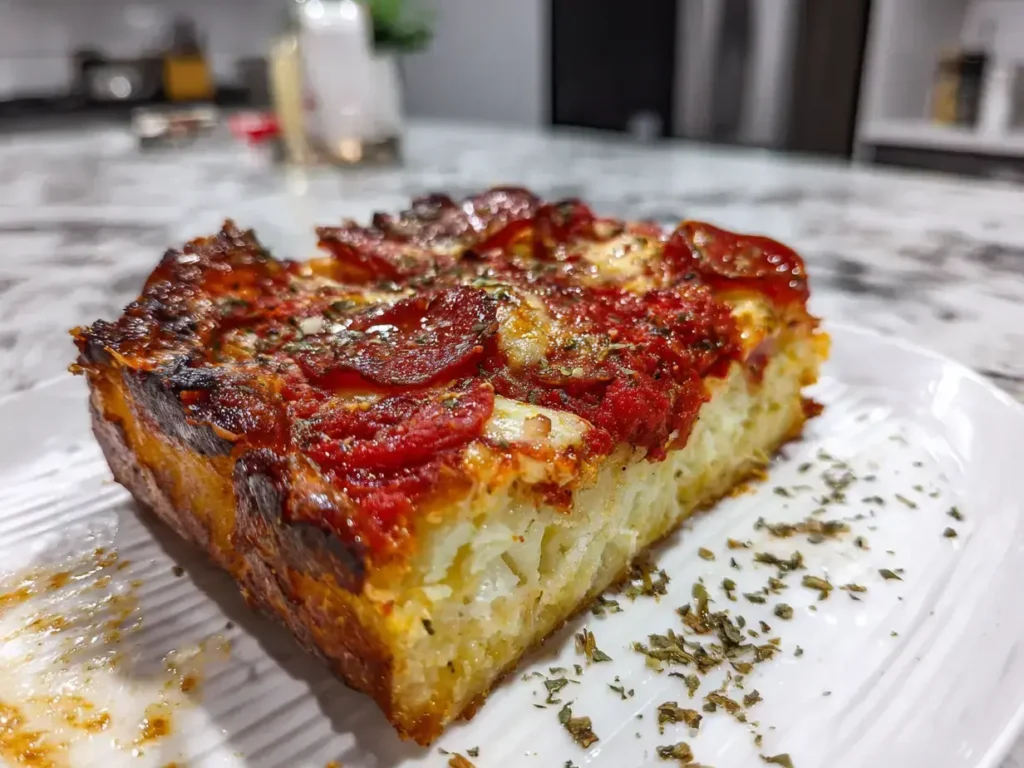
Hey there, friends! Olivia here. Do you remember the first time you bit into a pizza that was more than just a meal? For me, it was in a noisy, vibrant pizzeria right here in the States, but the flavors transported me straight to a memory of a bustling Italian square. Today, I want to share the magic of a truly special pie: Detroit Style Pizza. This isn’t your average delivery pizza; it’s a masterpiece of contrasts. Imagine a crust that’s simultaneously crispy and airy, topped with cheese that gets gloriously caramelized at the edges, all crowned with a bright, zesty sauce. It’s a square pizza with a heart of gold, and I’m so excited to guide you through making it in your own kitchen. Honestly, once you try this Detroit pizza recipe, it might just become your new family favorite.
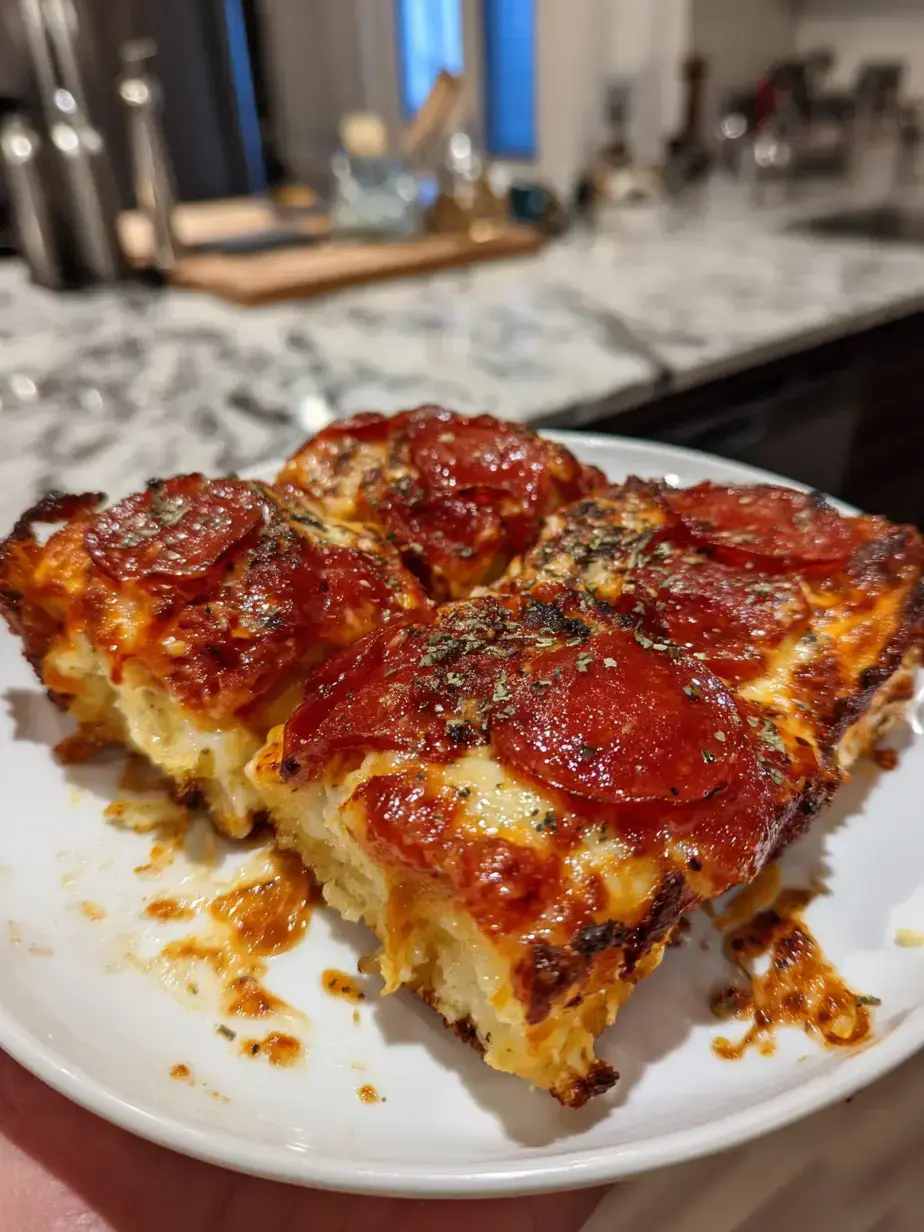
Table of Contents
So, what exactly is this pizza we’re raving about? Fundamentally, Detroit Style Pizza is a deep-dish square pizza known for its unique structure and flavor profile. Interestingly, it’s baked in a well-oiled blue steel pan, which gives the crust its signature crispy, fried edges. The assembly is also a key differentiator; Wisconsin brick cheese is spread directly onto the dough, followed by toppings, with the sauce often added in stripes on top just before baking. This method prevents the dough from getting soggy and allows the cheese to caramelize beautifully against the hot pan. Consequently, you get a perfect bite every time: chewy, crispy, cheesy, and saucy.
An authentic Detroit deep dish pizza has a few non-negotiable characteristics. First, the crust should be light and airy like a focaccia, yet with a crunchy, almost fried bottom and edges. Second, the cheese is paramount. Traditionally, brick cheese is used because it melts beautifully and has a high fat content that creates those irresistible caramelized bits. Finally, the sauce is typically a simple, robust tomato sauce that’s added on top, so it stays bright and doesn’t weigh down the crust. This combination of textures and flavors is what sets it apart from other sicilian style pizza variations.
This particular Detroit pizza recipe is designed for the home cook. I’ve tested it to ensure you get that professional-quality result without any fancy equipment. We’ll use bread flour for a chewy crumb and instant yeast for convenience. Meanwhile, the step-by-step instructions will guide you through the process of achieving that perfect rise and crisp. Furthermore, if you love cheesy recipes, you’ll appreciate how this pizza celebrates cheese, much like my incredibly cheesy garlic bliss bread.
The story of Detroit Style Pizza is a wonderful American tale. It all started in 1946 at a place called Buddy’s Rendezvous, which later became the legendary Buddy’s Pizza Detroit. The owner, Gus Guerra, and his wife Anna, were looking to add something new to their menu. Anna used her mother’s recipe for sicilian style pizza and baked it in the blue steel pans they used for storing auto parts. The result was an instant hit, creating a culinary icon. This happy accident in a Motor City bar laid the foundation for a pizza style that has won hearts across the nation.
The choice of pan was a stroke of genius. These industrial pans, typically used by auto workers, were perfectly sized and conducted heat evenly. As a result, they created the ideal environment for the crust to develop its characteristic texture. The pans are still essential today for anyone serious about making authentic Detroit style pan pizza. This innovation reminds me that sometimes the best recipes come from using what you have on hand, a philosophy I also use when making simple yet delicious traditional Italian meatballs in tomato sauce.
For decades, Detroit Style Pizza was a beloved local secret. However, its popularity has exploded in recent years, with pizzerias specializing in this style opening up all over the country. Food critics and home cooks alike have fallen in love with its unique qualities. Nowadays, you can find variations and homages to the original Buddy’s Pizza Detroit masterpiece everywhere. If you’re curious about where to buy Detroit style pizza, many local pizzerias now offer their take, but nothing beats the pride of making your own.
Great pizza starts with great ingredients. Luckily, the ingredient list for this Detroit pizza dough and toppings is straightforward. Let’s break down why each component is so important. For the dough, bread flour is essential because its high protein content creates the strong gluten network needed for a chewy, airy crust. Instant yeast makes the process quicker, and kosher salt brings out all the flavors. Warm water and olive oil hydrate the dough and keep it tender.
The star of the topping show is, without a doubt, the cheese. Brick cheese is the traditional choice for a reason. It has a superb melting quality and a mild, slightly tangy flavor that becomes rich and nutty when it caramelizes against the hot pan. If you absolutely cannot find brick cheese, a combination of low-moisture mozzarella and mild cheddar can be a decent substitute, but seek out the real thing if you can for the most authentic experience. This cheesy focus is similar to what makes my easy cheesy garlic rolls so irresistible.
For the Detroit pizza sauce, simplicity is key. You want a smooth, uncooked tomato sauce that is bright and acidic to cut through the richness of the cheese and crust. A good-quality canned tomato sauce or crushed tomatoes work perfectly. As for Detroit style pizza toppings, classic pepperoni is always a winner, as the slices curl and crisp at the edges. However, feel free to get creative! Sautéed mushrooms, onions, or even a sprinkle of spicy sausage would be delicious. Just remember to keep toppings relatively light to avoid a soggy crust.
| Ingredient | Key Role |
|---|---|
| Bread Flour | Creates a chewy, structured crust |
| Brick Cheese | Provides authentic flavor and caramelization |
| Simple Tomato Sauce | Adds a bright, acidic contrast |
If you want to achieve the real deal, the pan is non-negotiable. A true Detroit style pizza pan is a medium-weight blue steel pan, typically measuring 10×14 inches. These pans are seasoned like cast iron and are fantastic conductors of heat. The heavy-gauge steel ensures the bottom and sides of the pizza cook evenly, creating that iconic crispy texture. Using the right pan is the single most important step in replicating the magic of a Buddy’s Pizza Detroit experience at home.
If you invest in a blue steel pan, you’ll need to season it first to create a non-stick surface. Simply coat the inside with a thin layer of neutral oil (like canola or vegetable oil) and bake it upside down in a 450°F oven for about an hour. After each use, clean it with hot water and a soft brush—avoid soap to maintain the seasoning. With proper care, this pan will last a lifetime and only get better with age. It’s a kitchen workhorse, much like the baking dishes I use for my gorgeous peach upside-down cakes.
Don’t have a specialized pan? Don’t worry! You can still make a fantastic pizza. A heavy-duty, light-colored metal baking pan of a similar size will work. A well-seasoned cast-iron skillet can also yield a great result, though the shape will be round. Just avoid glass or ceramic dishes, as they don’t conduct heat the same way and won’t give you that crispy bottom crust. The goal is a pan that can handle high heat and transfer it efficiently to the dough.
The heart of any great pizza is its crust, and for Detroit Style Pizza, the Detroit pizza dough is a dream to work with. It’s a high-hydration dough, which means it’s a bit sticky, but that’s what gives it such an open, airy crumb. The process is straightforward: mix, knead, and let it rise. The key is patience. Allowing the dough to double in size develops flavor and texture. This slow rise is what separates a good pizza from a great one.
When you knead the dough for 8-10 minutes, you’re developing the gluten strands in the bread flour. This creates a strong, elastic network that can trap the gases released by the yeast. Consequently, your dough will rise beautifully and give you that perfect chewy texture. If you have a stand mixer with a dough hook, you can use it on medium speed for about 5-6 minutes. Otherwise, kneading by hand is a wonderfully therapeutic process. It’s a fundamental skill, just like making the perfect dough for my soft cinnamon roll sugar cookies.
After the first rise, you’ll press the dough into your oiled pan. This second, shorter rise is crucial. It allows the gluten to relax one last time, ensuring the dough will stretch to the corners of the pan without springing back. Cover the pan and let it sit in a warm, draft-free spot for about 30 minutes. You’ll know it’s ready when the dough looks puffy. This step ensures an even thickness and a light final crust.
Now for the fun part—bringing it all together! Following these steps carefully will lead you to Detroit Style Pizza perfection. First, make sure your dough has completed its first rise and is ready to be shaped. Then, preheat your oven; a hot oven is essential for that spring and caramelization. Finally, have all your toppings prepped and ready to go. Assembly is quick, and the pizza goes straight into the oven. The aroma that will fill your kitchen is absolutely heavenly.
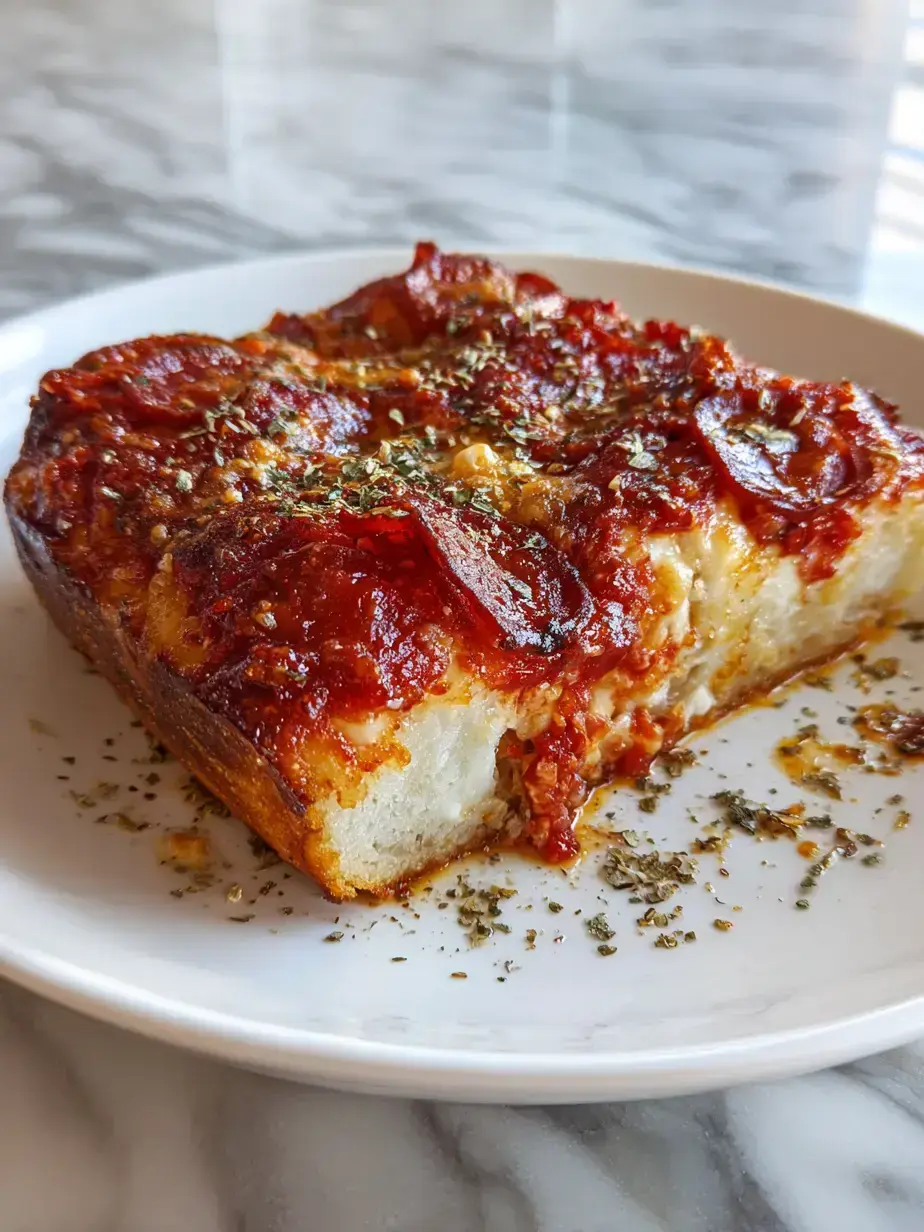
This is the most distinctive part of how to make Detroit style pizza. Instead of sauce first, we lay the cheese directly on the dough, all the way to the edges. Then, we add the pepperoni. Finally, we spoon the sauce in three thick stripes over the top. This method protects the dough from getting soggy and allows the cheese to melt and caramelize directly against the hot pan. It’s a brilliant technique that creates the signature flavor and texture profile.
Bake your pizza on a lower rack to ensure the bottom crust gets nice and crispy. After 15-18 minutes in a 475°F oven, you should see a deeply golden brown crust with cheese that is bubbly and caramelized around the edges. The sight is unforgettable. Once it’s out of the oven, immediately run a spatula around the edges to loosen it. Then, let it rest for just 5 minutes before slicing. This brief rest allows the cheese to set slightly, making for cleaner slices.
It’s the great pizza debate! While both are iconic American deep-dish styles, Detroit vs Chicago pizza are quite different. A Chicago deep-dish has a tall, buttery, pie-like crust that holds a massive amount of cheese, toppings, and chunky sauce. It’s often eaten with a knife and fork. In contrast, Detroit Style Pizza has a lighter, focaccia-like crust, and the assembly is reversed (cheese first, then toppings, sauce on top). It’s also rectangular and designed to be eaten by hand. Both are delicious, but they offer unique experiences.
The texture difference is dramatic. Chicago pizza is dense and hearty, a real meal in a slice. Detroit pizza is all about the contrast between the airy, chewy crumb and the crispy, fried edges. Flavor-wise, Chicago pizza is rich and decadent, while Detroit pizza is balanced, with the bright sauce cutting through the rich, caramelized cheese. It’s like comparing a rich, layered dessert like my decadent churro cheesecake to a perfectly balanced, fudgy and chewy brownie—both are amazing, just different.
Choosing between them depends on your mood! If you’re craving a lighter, crispier crust with a focus on caramelized cheese, Detroit Style Pizza is your winner. If you want a hearty, saucy, fork-and-knife kind of meal, go for Chicago style. Fortunately, you don’t have to choose forever—you can master both in your own kitchen. Exploring different pizza styles is part of the joy of cooking.
Your beautiful Detroit Style Pizza is ready! Slice it into squares—the traditional way—and serve it immediately. It’s fantastic on its own, but a simple side salad or some breadsticks make a great accompaniment. The crispy, cheesy corners, known as “frico” edges, are the prized pieces, so be prepared to fight for them! This pizza is a true crowd-pleaser, perfect for game day, family movie night, or any gathering.
If you have leftovers (a big “if” in my house!), they store quite well. Let the pizza cool completely, then place it in an airtight container in the refrigerator for up to 3 days. To reheat, avoid the microwave, as it will make the crust soft. Instead, reheat slices in a 350°F oven or a toaster oven for about 10 minutes, or until the cheese is melted and the crust is crispy again. This method restores it to near-original glory.
This pizza is fantastic for entertaining because you can do a lot of the work ahead of time. You can prepare the Detroit pizza dough a day in advance; after the first rise, punch it down, place it in an oiled bowl, cover tightly, and refrigerate. The next day, let it come to room temperature for an hour before pressing it into the pan for its second rise. You can also pre-shred your cheese and make your sauce ahead of time. This makes assembly a breeze when your guests arrive, similar to how I prep for my easy make-ahead s’mores bars.
You can, but the crust will be less chewy. Bread flour has a higher protein content, which is essential for developing the strong gluten structure that gives Detroit Style Pizza its signature texture. For the best results, stick with bread flour.
The closest substitute is a 50/50 mix of low-moisture, whole-milk mozzarella and Monterey Jack. The mozzarella provides great melt, while the Monterey Jack offers a similar buttery flavor. Avoid pre-shredded cheese, as it contains anti-caking agents that prevent proper melting.
This usually means the gluten is too tight. After the first rise, let the dough rest for 10-15 minutes before trying to press it out. Then, press it gently from the center outward. If it still springs back, cover it and let it rest in the pan for another 10-15 minutes before trying again.
Make sure your oven is fully preheated and you’re using a metal pan. Glass or ceramic won’t get hot enough. Also, ensure the cheese is spread all the way to the edges of the pan so it directly contacts the hot metal, which is what creates the caramelization.
Yes! Bake the pizza completely, let it cool, then wrap individual slices tightly in plastic wrap and aluminum foil before freezing. Reheat from frozen in a 375°F oven for 15-20 minutes until hot and crispy.
They are cousins! Traditional sicilian style pizza often has a thicker, focaccia-like crust similar to Detroit’s. However, the key difference is the assembly: Sicilian pizza typically has sauce under the cheese, while Detroit style puts the sauce on top, leading to its unique characteristics.
Friends, I hope this guide fills your kitchen with the incredible smells and tastes of a true American classic. Making Detroit Style Pizza at home is a rewarding adventure that brings people together. From its humble beginnings in an auto shop to your very own oven, this pizza is a story of innovation and deliciousness. So, gather your ingredients, heat up that oven, and get ready to create a pizza memory that your family will ask for again and again. Happy baking!

Welcome to Mac Recipes! I'm here to prove that amazing home-cooked meals don't need to be complicated. From weeknight dinners to weekend treats, I create recipes that fit into your busy life—delicious, doable, and always worth making.
More About Me